How to Know It’s Time for Water Heater Replacement
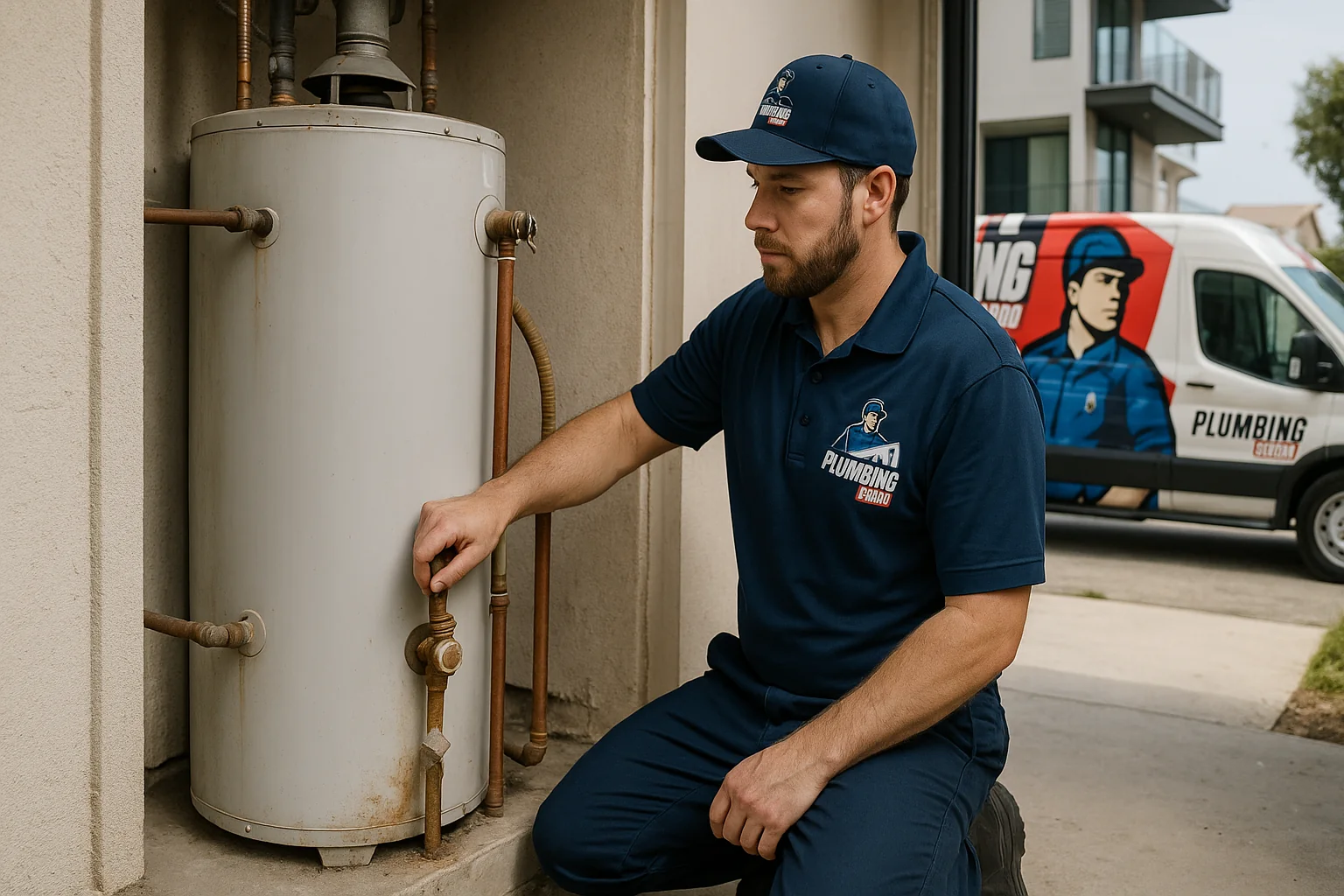
Water heater replacement: clear signs to watch
If hot showers sputter or the water looks cloudy, it may be time to consider water heater replacement. Checking the unit’s age, watching for leaks, and noting drops in performance will help you decide whether a repair or a full replacement makes more sense for your Los Angeles or Orange County home.
Age, efficiency, and performance clues
- Age: Tank units commonly serve 6–12 years; older models may run but waste energy.
- Efficiency: Rising utility bills or inconsistent temperatures suggest tired components.
- Noise: Rumbling indicates sediment that insulates the burner and reduces capacity.
Leaks and water quality warnings
- Puddles or corrosion at the base point to tank wear that usually isn’t repairable.
- Rust‑tinted or sandy water can mean internal rust or sediment—both reduce output and may hasten failure.
Planning your replacement
- Choose capacity and recovery rate for your household; consider tankless for continuous hot water.
- Replace aging supply lines, add an expansion tank where required, and verify venting or electrical needs.
- Schedule installation to minimize downtime and confirm permit basics with your installer.
When a repair still makes sense
Thermostats, elements, anode rods, or relief valves can sometimes restore performance on younger units. For older tanks with leaks, replacement is the safer bet.
Final word: Match the symptoms to the solution so you’re never surprised by a cold shower again. Ready for help today? Call Plumbing Squad (LA & Orange County).
Key Takeaways
- Understand the warning signs that it’s time for water heater replacement so you can act quickly and avoid damage.
- Use safe, proven methods first; avoid shortcuts that create bigger problems.
- Prevent issues with routine maintenance and timely upgrades.
- Know when to call a professional to save time, money, and stress.
Choosing the Right Water Heater
Match capacity (or flow rate for tankless) to household size and simultaneous hot‑water needs. Consider fuel type, efficiency ratings (UEF), and installation location.
Tank vs. Tankless
- Tank: Lower upfront cost, simpler install; standby heat loss.
- Tankless: Endless hot water, higher efficiency, longer life; higher upfront cost and venting requirements.
Maintenance for Longevity
- Flush tanks annually to reduce sediment.
- Replace anode rods every 3–5 years (water quality dependent).
- Descale tankless units per manufacturer guidelines.
FAQs
How long does a water heater usually last before it needs replacing?
Most tank water heaters last 8–12 years, and tankless units often run 15–20 years with maintenance. Age is the single biggest predictor: once a tank passes 10 years, rising energy bills, slow recovery, or rust-colored hot water usually mean replacement is the smarter spend than another repair. We’ll check the manufacture date on the rating plate and assess condition before recommending either path.
Is it worth repairing an old water heater or should I replace it?
For a unit under 8 years old, a single failed part — thermostat, heating element, anode rod, or relief valve — is usually worth repairing. For a tank past 10 years, especially one that’s leaking from the body, replacement is the safer call because the tank itself has corroded and can’t be fixed. We give you both numbers so you can decide based on cost, not guesswork.
What are the warning signs I shouldn’t ignore?
Water pooling around the base, rusty or cloudy hot water, popping or rumbling noises, inconsistent temperatures, and a jump in energy bills are the classic signals. A leak from the tank body is the most urgent — it means the unit is failing and should be replaced before it bursts and causes water damage. Call us the moment you see standing water near the heater.
How much does water heater replacement cost in LA and Orange County?
A standard tank water heater replacement typically runs from the high hundreds into the low thousands installed, depending on capacity, fuel type, and code upgrades like seismic strapping or an expansion tank. Tankless conversions cost more upfront because of venting and gas-line changes but save on energy long term. After an on-site assessment we provide a firm, written, upfront price — no surprises.
Need a Reliable Plumber?
Plumbing Squad handles inspections, repairs, and emergency service with transparent pricing and clean workmanship. Call today or book service to get expert help fast.
