Water Hammer Arrestor Services
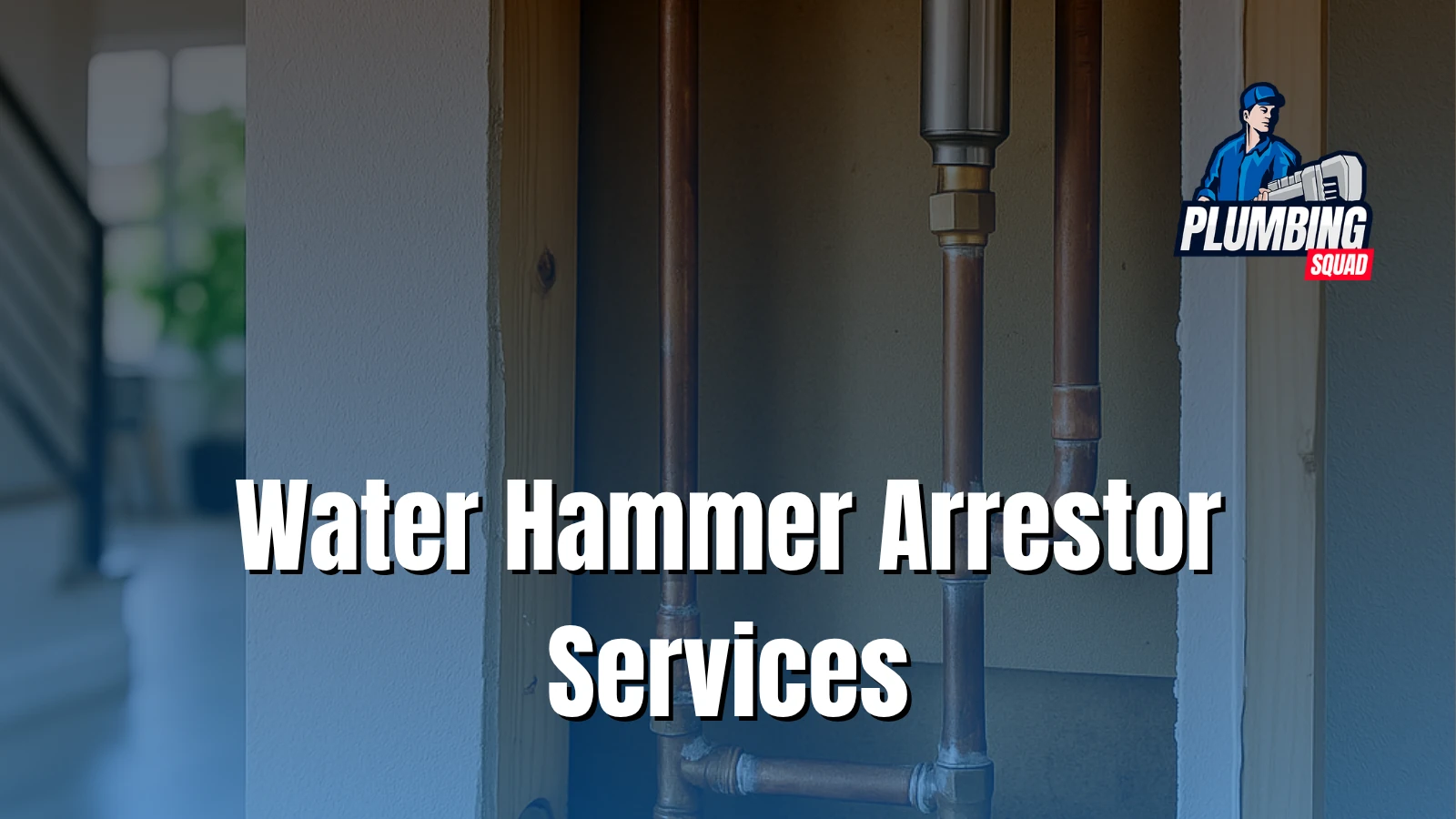
Water Hammer Arrestor Services
Scope of Work


Water Hammer Arrestor Services
FAQs
Find quick answers to the most common questions about our plumbing services. These FAQs cover what to expect, service details, and helpful tips to make scheduling easier.
Water hammer is the loud bang or thump you hear when a fast-closing valve (washing machine solenoid, dishwasher, ice-maker, or any quarter-turn ball valve) suddenly stops a moving column of water. The water mass slamming to a stop creates a pressure spike that resonates through the piping. Loose pipes amplify the noise. Common causes: high system pressure (above 80 PSI), worn or stuck check valves, fast-closing appliance valves, and pipes not properly secured to framing.
Yes — older diaphragm-type and air-cushion arrestors lose their effectiveness over time as the cushion dissipates or the diaphragm cracks. Modern bellows-style arrestors (Sioux Chief, Watts) are more durable and can last 20+ years. Placement matters as much as the unit — arrestors need to be installed close to the source of hammer (washing machine box, dishwasher angle stop) to be effective; one installed at the wrong end of a long branch won't damp the hammer at the offending fixture.
Yes — if your home's static pressure is above 80 PSI (common in newer subdivisions and homes near hilltop reservoirs), a pressure-reducing valve at the main brings system pressure into the 50-70 PSI sweet spot. Lower pressure reduces hammer intensity, extends fixture life, prevents pipe and fitting failures, and lowers water bills. We measure your static pressure, install or service the PRV at the main, and adjust the setpoint to recommended levels.
Often, yes. A lot of water-hammer "noise" is actually the pipes themselves slamming against framing or other pipes when the pressure pulse hits. Proper strapping every 4-6 feet on copper, every 32" on PEX, with cushioned isolators where pipes pass through framing, eliminates most of the audible noise. We open access where needed, add supports, and verify the noise stops before closing up. Often this combined with arrestors and PRV adjustment fully solves the problem.